Gift giving culture is the shared set of customs that tell people how to choose, present, receive, and return gifts in a community. These norms cover timing, reciprocity, symbolism, and what respect looks like in practice, and they vary by country, religion, and family even when everyone shares the same good intentions.
If you have ever wrapped something you felt good about and watched it land with a polite smile that did not quite reach someone's eyes, you may have bumped into a rule from a gift giving culture different from your own. Most of us have stood in a shop or scrolled a registry feeling reasonably sure we picked something thoughtful, and still missed a detail that mattered more than the gift itself.
The customs are learnable, and getting them right signals respect in a way the object alone cannot. What follows is how gift giving culture works in broad terms, what changes from one region to the next, and the practical details that trip people up most often at weddings, birthdays, and everyday exchanges.
Why gift giving culture exists
Every known society exchanges gifts, and anthropologists have long noted that the practice is rarely a one-way transfer. French sociologist Marcel Mauss described gifts as creating three linked obligations: to give, to receive, and to reciprocate. The object matters, but so does the relationship it keeps alive. A present can confirm that you still belong to a family circle, mark a life transition like marriage or a new baby, or open a door to a closer connection with someone you want to know better.
That is why gift giving culture runs deeper than shopping lists. It encodes what a community values: respect for elders, group harmony, hospitality, or individual taste. When those values differ, the same gesture can read as generous in one home and careless in another.
Collectivist and individualist gifting
Many East Asian, South Asian, and African traditions treat gifts as part of a web of relationships where reciprocity, presentation, and saving face all matter. Group harmony often outweighs personal preference, which is why etiquette can feel more prescribed than spontaneous. Gifts may be chosen to honor the occasion and the relationship rather than to surprise someone with an item they never mentioned wanting.
Much of Western gift giving culture leans the other way: individual taste matters, immediate unwrapping is common, and matching the exact value of a return gift is less rigid than in many collectivist contexts. Neither approach is morally superior. They are different languages for showing care, and mixed families, workplaces, and friend groups collide across them all the time.
Gift giving traditions around the world
National summaries are starting points, not laws. Families within the same culture often interpret traditions differently. Still, these regional patterns come up often enough that they are worth knowing before you buy.
Japan
Presentation is central. Gifts are often wrapped with care, offered with both hands, and sometimes refused once before acceptance as a sign of humility. Major annual exchanges like Ochugen and Oseibo reinforce work and social ties. Recipients frequently wait to open gifts in private so neither person has to perform a reaction on the spot.
China
Symbolism runs through color, number, and object choice. Red signals good fortune, auspicious totals often include eights, and red envelopes with cash are standard at Lunar New Year and weddings. Clocks, sharp objects, umbrellas, and shoes carry taboo associations for many families. In business and official settings, gift exchange also supports guanxi, the long-term relationships that make cooperation possible.
India
Festival gifting is woven into social life, with Diwali among the busiest seasons for sweets, dry fruits, and small tokens of appreciation. Bright wrapping colors are welcome; black and white are often avoided as unlucky. Gifts are commonly offered with both hands, and the exchange is less about price than about maintaining strong relationships across family and community networks.
Germany
Practical, high-quality items are a common choice for hosts and celebrations. Punctuality matters when you arrive with a gift, and red roses are reserved for romantic partners, so a mixed bouquet is safer for friends or colleagues. Christmas traditions include Advent gifts and St. Nicholas Day surprises for children on December 5.
Mexico
Gift giving culture here often emphasizes joy and togetherness. Presents are frequently opened in front of the giver, with visible excitement part of the ritual. Community celebrations like Las Posadas and Día de los Reyes extend gifting beyond a single household, and the piñata turns sharing into a shared event rather than a private handoff.
South Africa
Bringing wine, flowers, or chocolates when visiting someone's home is a familiar sign of gratitude. Weddings mark new chapters with meaningful exchanges, and in some communities Lobola, a bride-price tradition involving cattle or monetary gifts from the groom's family, formalizes respect and unity between families.
Cash and how you present it
In much of North America and Western Europe, cash can feel like the option you reach for when you ran out of time, which is why some of us hesitate even when money would genuinely help. In Chinese, Japanese, Korean, and many other traditions, cash in a ceremonial envelope is not a shortcut at all: it is the respectful, expected form of giving at weddings, Lunar New Year, and major milestones. The envelope carries weight, and handing over loose bills or a plain white envelope can flatten that meaning entirely.
If you are giving money across cultures, presentation is usually the part people notice first. A red envelope in Chinese contexts signals luck and prosperity. In Japanese wedding etiquette, guests often use specific decorative envelopes with crisp new notes inside, because worn bills read as low regard. We think of the container as part of the gift, not packaging around it.
Numbers carry meaning
Amounts and quantities are rarely neutral once symbolism enters the conversation. In Jewish gifting, multiples of 18 are traditional at Bar and Bat Mitzvahs, weddings, and significant birthdays because 18 corresponds to chai, the Hebrew word for life. A generous check that stops just short of a multiple of 18 can miss the blessing people were hoping to send.
In Chinese and Japanese contexts, four is widely avoided because it sounds like the word for death in both languages, so a set of four items or a total built around four can carry that association whether you meant it or not. Eight tends to read positively in Chinese gifting because it sounds like wealth, which is why auspicious totals often include eights. Japanese wedding guests sometimes avoid amounts that divide evenly in ways that suggest splitting, because the symbolism around togetherness matters as much as the number on the envelope.
Top Tip
Before you buy, ask one person who shares the recipient's background whether anything about the gift, the amount, or the timing would read oddly. That single conversation prevents more mistakes than an hour of generic research.
Objects that carry the wrong symbolism
Some gifts carry symbolism that overrides how nice they are on paper. In several Chinese-influenced cultures, giving a clock is tied to funeral rites because the phrase for "giving a clock" sounds like attending someone's funeral, so even a beautiful timepiece can land badly. Umbrellas can suggest separation for similar phonetic reasons. Shoes in some traditions imply you want someone to walk away. Knives and scissors often signal severing ties, which is why some recipients return a small coin when given a blade, symbolically buying it to break the omen.
When a gift is practical in one world but loaded in another, it is worth pausing and asking whether the recipient's background gives the object a second meaning you did not intend. That is especially true for housewarming gifts like knife sets or decorative timepieces in mixed cultural settings.
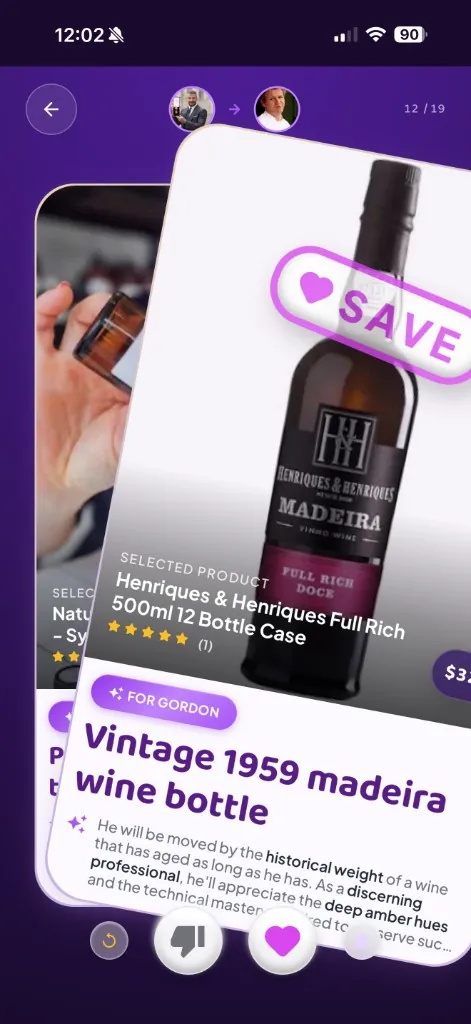
Bow is GiftyWow's AI gift-finding engine, and cultural context is one of the details we weigh when we are matching gifts for someone whose background differs from our own.
The GiftyWow Take
I see this fail most often when a list of "top anniversary gifts" is written for one cultural context and posted as if it applies everywhere. The occasion is the same. The rules around it are not. When someone tells us about their person, we treat family background and tradition as part of who they are, not a footnote on the calendar date.
How gifts are received and opened
In Japan and much of East Asia, gifts are received with both hands as a sign of respect, and they are often set aside to open later in private. If someone does that after you give them something, they are usually following etiquette rather than signaling disappointment. Opening in front of the giver can put both people in an awkward position, where the recipient has to perform the right reaction regardless of how they actually feel.
Western gifting often runs the other way. We are used to unwrapping immediately and showing enthusiasm while the giver watches, because their satisfaction is partly tied to seeing our reaction in real time. Mixed gatherings confuse both sides routinely, so a quick conversation about preferences beats assuming either style is universal. The same tension shows up in professional settings, which is why our guide to high-stakes occasions spends time on weddings, milestone birthdays, and other events where the relationship is doing most of the work.
Flowers and what they actually signal
Flowers look like the safe choice until you realize color and variety carry different messages in different places. Chrysanthemums are tied to mourning in Belgium, Italy, France, and several other European countries, while in some East Asian cultures they can symbolize longevity and work well for birthdays. White lilies often read as funeral flowers in the UK, and white flowers broadly can signal mourning in many East Asian contexts, which matters when you are choosing wrapping or bouquets for celebratory occasions.
Red roses in Germany are strongly romantic, so giving them to a host, friend, or colleague can imply intentions you did not mean. Yellow roses carry awkward associations in some European traditions as well. When we are unsure, a mixed arrangement in warm tones tends to be safer than betting on a single symbolic color.
Navigating milestones
Weddings, milestone birthdays, and new babies are where cultural rules pile up fastest, because the occasion itself carries expectations that vary by tradition. The underlying intention is usually the same: you want to honor the person and mark the moment. The practice around that intention is what changes.
Weddings
Western registries and Eastern cash envelopes both make sense in their own worlds, and both can feel strange to someone raised with the other tradition. In Japan, guests use decorative envelopes with crisp new notes. In Indian and many Middle Eastern weddings, jewelry and textiles exchanged between families are part of the ritual itself, not a side note to the celebration.
Milestone birthdays
The birthdays that carry the most weight vary widely. In Chinese tradition, the 60th marks a full zodiac cycle and is celebrated as a longevity banquet. In Korea, the first birthday (Doljanchi) and 60th (Hwangab) are major events with their own gift expectations. A number that feels routine in one culture can be the whole point in another.
Baby gifts
In many Asian cultures, celebrating before a safe arrival is considered inauspicious, with gift-giving often happening at a one-month or 100-day party instead. Gold jewelry for newborns remains a valued tradition in many South Asian and Middle Eastern families. If you are unsure about timing, a gentle question beats a well-meant surprise sent too early.
Professional and business gifting
Workplace gift giving culture adds another layer because the gift can be read as respect, relationship-building, or something closer to influence. In Japan and China, carefully chosen business gifts often reinforce long-term partnerships, while extravagant or poorly timed presents can embarrass both sides. Many companies also operate under anti-bribery policies that limit what employees may accept, so modest, occasion-appropriate items tend to be safer than luxury goods with no clear business context.
When you are gifting across borders for work, research local norms on value, presentation, and whether gifts should be opened in the meeting or later. Observing how colleagues in that office handle similar occasions is often more reliable than a generic country guide written for tourists.
How to learn someone's gift culture before you shop
Country guides are useful, but the family in front of you is the real authority. Ask your partner, host, or mutual friend what their people usually give for this occasion, whether cash is welcome, and whether gifts are opened on the spot. Watch what happens at the last gathering you attended together: who brought what, how it was wrapped, and when it was opened.
Children in blended or multicultural families can learn early that different households have different gift languages. Framing that as interesting rather than right or wrong prevents the kind of moment where a four-year-old rips open a red envelope before the giver has let go. Adults deserve the same curiosity we extend to kids: most people are glad you asked.
If you want a broader frame for why good intentions still miss, our piece on why gift-giving is harder than it looks walks through the gap between what givers assume and what recipients actually feel. And when you are ready to match a gift to someone specific, including the cultural details that matter to them, see how GiftyWow compares to the ways most of us usually shop.