

Most of us default to one gifting style without realizing it, and most of us have no idea that is what is happening. We think we are making considered choices each time. We are mostly running the same program.
Understanding your default mode is genuinely useful. It tells you exactly where your instincts are reliable, and where they will quietly lead you wrong.
The four default gifting modes
The Practical Giver
The Practical Giver shows love by solving problems. They think carefully about what the recipient needs, tend to give useful things, and are quietly proud of giving something that actually gets used. Their gifts are often well-received by people in transition: new parents, new graduates, people setting up a home.
The blind spot: occasions where what someone needs most is to feel seen, not helped. The Practical Giver's instinct to be useful can miss the emotional register entirely. A new mother who just wanted flowers gets a meal delivery subscription she did not ask for. It is objectively useful. It does not feel the same.
The Researcher
The Researcher studies the recipient obsessively. They refuse to take an easy option because the effort is the point. They know the person's interests, track their offhand comments, and feel a particular satisfaction in finding something that could only have been chosen for this specific person.
The blind spot: overthinking. The researcher can talk themselves out of the perfectly adequate gift in pursuit of the perfect one. They can also misjudge what the recipient actually wants because their own intellectual investment in finding something original overrides their accurate read of the person's preferences.
The Last-Minute Sincere Gifter
This gifter relies on the emotional weight of the moment to carry the gift. They arrive with something grabbed at the last minute but delivered with genuine warmth, and they believe the sincerity cancels out the lack of preparation.
The blind spot: recipients notice preparation. Not always consciously, but they do. A gift selected weeks in advance because the giver was paying attention says something different from a gift selected that morning because the giver remembered. Both can be good gifts. Only one signals that the occasion mattered enough to think about in advance.
The Self-Projecting Giver
This gifter gives what they themselves would want. Their gifts are often genuinely good, but good for the giver, not necessarily for the recipient. They choose the kind of book they find interesting, the kind of wine they enjoy, the kind of experience they would like to have.
The blind spot: every gift says something about the giver's relationship with the recipient. A gift that is clearly about the giver's own taste, rather than the recipient's, sends a message the giver did not intend. The research describes this plainly: gifts reveal the giver, and not always favorably.
Which mode are you in right now?
You are probably not one style all the time. The same person can be a Researcher for a close friend and a Last-Minute Sincere Gifter for a colleague. The useful question is: which mode are you in for this specific occasion and this specific person? Knowing the answer tells you which part of your default instinct to trust and which part to override.
Take the quiz to find your default style in about 60 seconds.
How to use your style (not fight it)
The goal is not to become a different kind of gifter. It is to know your defaults well enough to catch yourself when they are leading you wrong.
If you are a Practical Giver heading into an emotionally important occasion, ask: what would make this person feel celebrated, not just helped? The useful gift might still be right. But it is worth the question.
If you are a Researcher heading into a straightforward occasion, ask: is the perfect gift actually the enemy of the good one here? Sometimes the wish list item is the right call.
If you are a Last-Minute Sincere Gifter, ask: what would have been different if you had thought about this a month ago? The answer to that question is usually the better version of whatever you ended up with.
If you are a Self-Projecting Giver, ask: when did this person last tell you something they were excited about, and are you choosing this gift for them or for you?
The GiftyWow Take
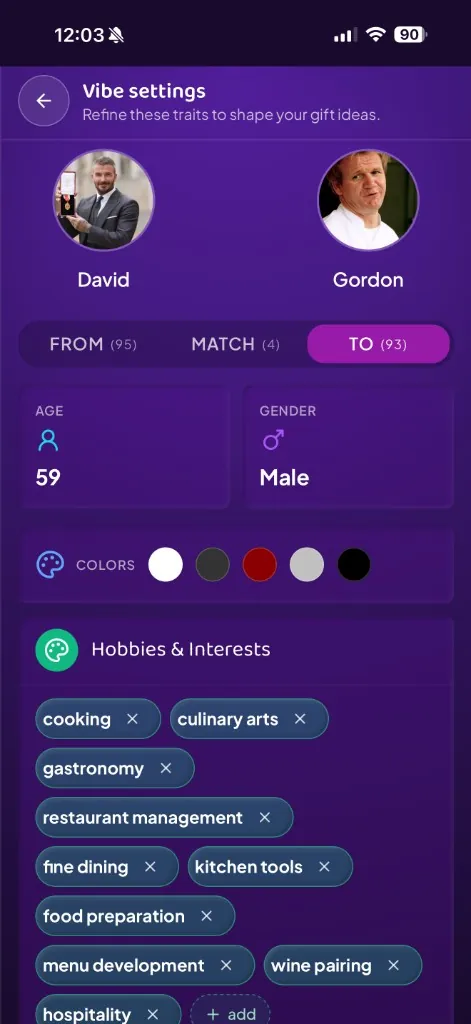
When someone uploads a photo of their person's space, the style they're buying for usually becomes obvious in about three seconds. Minimalist, maximalist, classic, eclectic. The problem most givers have is they are looking at the person through their own aesthetic lens, not the person's actual taste. The photo removes that filter. You stop projecting and start matching.