Yes, gift giving is commonly called a love language — a popular way to say that some people feel most loved through tangible tokens. Gifting research describes the same thing in different terms: gifts are symbolic communication. Recipients read empathy, effort, and fit from what you give; givers often choose what they would want themselves. That mismatch is why gifts miss even when the intention is right.
We give gifts at occasions because something in the relationship needs marking. But here is the thing gifting research keeps surfacing: most of us choose based on what we would feel proud to give, not what the other person actually wants.
At birthdays, we over-index on price, assuming a more expensive gift signals more care. Decades of research shows this assumption is wrong on both ends. Givers consistently believe recipients will appreciate a more expensive gift more. Recipients, when studied separately, show almost no correlation between price and appreciation. The expensive gift triggers something other than joy for many people: the uncomfortable feeling of owing something in return, which makes it hard to fully enjoy what they received.
At anniversaries, we reach for something romantic without asking what romance looks like to this specific person at this point in their life. A partner who has been together with someone for fifteen years has strong opinions about what belongs in their shared life. A romantic gesture that misreads those preferences signals something about how well the giver actually pays attention, and not in the direction the giver intended.
At occasions that call for care and sympathy, we often land on something that is quietly for us. Proof that we tried, that we noticed. Something that says the right thing in our own head. But the person on the receiving end is not in our head. They are dealing with their situation, and what they need is something that makes that situation marginally easier, not a gesture that requires an emotional response in return.
The research says
The most-cited finding in gifting psychology is also the most counterintuitive: givers who put more thought into a gift in order to signal closeness, rather than selecting something from a wish list, tend to produce gifts that are rated lower by recipients. The attempt to demonstrate intimacy through originality backfires because the giver's instinct about what the recipient wants is less accurate than they believe. For close friends especially, the desire to signal closeness overrides accurate prediction of preferences.
The practical implication: a gift from a wish list, selected with care and good timing, often lands better than a freely chosen gift intended to demonstrate deep knowledge of the person.
None of this means thoughtful gifts are wrong. It means the instinct to be thoughtful needs to be calibrated against what thoughtfulness actually looks like from the recipient's position, not the giver's.
There are three gaps that explain most gifting failures.
The first is the valuation gap. Givers and recipients evaluate gifts using different metrics. Givers think in terms of price, effort, and surprise. Recipients think in terms of fit, usefulness, and whether the gift signals that the giver understands them. A beautifully wrapped expensive object that misses who the person is will feel worse than a modest, accurate one.
The second is the perspective gap. Givers imagine their own reaction to the gift as they are selecting it, then assume the recipient will feel the same way. This produces systematic misfires: givers consistently choose qualitatively superior options (the expensive wine over the two bottles of average wine) because that is what they themselves would prefer to receive. Recipients, when evaluated independently rather than in comparison, often find the practical option more satisfying.
The third is the occasion gap. Different occasions carry different emotional weights, and many givers apply a single gifting instinct across all of them. A housewarming calls for different thinking than a 50th birthday. A sympathy gift operates under completely different rules than a graduation. Treating all occasions the same produces gifts that technically exist but do not say the right thing.
Why love languages name a real gifting tension (and what research adds)
Gifts as symbolic language
Gary Chapman's five love languages framework popularised the idea that some people feel most loved through receiving gifts. The concept resonates because it names something real. But the academic research tells us the underlying mechanism is richer than the label suggests.
Ethnographic and psychological research converges on a finding Chapman did not originate: gifts are among the most powerful forms of non-verbal communication in human relationships. Every gift sends signals about who the giver is, how they see the recipient, and where the relationship stands. When someone identifies receiving gifts as their love language, they are often describing a high sensitivity to reading those signals. They decode empathy, effort, and sacrifice from what you give, and they feel the absence of those signals acutely when a gift is generic, obligatory, or missing entirely.
One caveat worth noting: Chapman's five categories are widely used but not strongly supported by relationship science. Recent reviews find that most people value multiple forms of care rather than one fixed primary language. That does not make the experience less real. It means love languages are a useful vocabulary for a pattern the research maps in more detail.
The five love languages in one minute
Chapman proposed five ways people prefer to express and receive love:
- Words of affirmation — praise, compliments, verbal reassurance
- Acts of service — helpful actions that reduce someone's load
- Receiving gifts — tangible tokens that say "I was thinking of you"
- Quality time — undivided attention and shared presence
- Physical touch — affectionate contact from hand-holding to embrace
Most people respond to several of these, not one exclusively.
When gifts is your language
People whose primary expression is gift giving are not materialistic. Research consistently shows that financial value and emotional value are two entirely different things. The three pillars of a gift's emotional value are:
- Empathy — chosen specifically for this person
- Surprise — something they did not expect but recognise as right
- Sacrifice — visible effort, time, or thought
A person who values gifts is reading for those signals, not for a price tag. A favourite snack bought on the way home, a book tied to a conversation from two weeks ago, a small item that references a shared memory. The cost is irrelevant. The attention is everything.
When gifts is not their language
If someone values quality time, they would often rather have an afternoon of undivided attention than a beautifully chosen object. Experience gifts, planned days together, or even a shared meal without phones outperform physical items for these recipients. Giving them things when they want presence is the gifting equivalent of speaking French to someone who only hears Spanish. The intention is fine. The signal does not land. For a deeper look at your own default gifting mode, that is what giving styles are for.
Mismatched rulebooks
One of the clearest findings in gifting research is that people operate from different internal rulebooks without realising it. Some people approach gifts through symbolic communication rules, where what the gift says about the relationship matters most. Others default to economic exchange rules, where practicality, utility, and fair financial value dominate. When partners use different rulebooks, the same gift sends two different messages. A practical kitchen appliance is care under one system and a statement of disregard under the other.
This maps directly to the perspective gap described above: we give in the style we ourselves would appreciate receiving, not in the style the other person is reading for. Love languages are one label for this mismatch. The research calls it the giver-recipient asymmetry. Either way, the fix is the same: shift your attention from what feels impressive to give, toward what feels accurate to receive.
The fix
Before selecting a gift, answer three questions in order:
- What does this occasion mean to this person specifically, not what it typically means?
- What does this person's life look like right now, and what would genuinely make it better or more enjoyable?
- What can you give that they would not buy for themselves but would be clearly glad to have?
If the honest answer to any of these questions produces a gift that feels less impressive than what you were planning, give the less impressive one. Fit beats polish almost every time.
The good news is that the gap between giver instinct and recipient experience closes significantly when the giver does one simple thing: actually pay attention to the person rather than to the occasion.
Not reading their wish list, necessarily. Not asking them directly, necessarily. But noticing:
- What are they currently interested in?
- What do they already own that they love?
- What have they mentioned wanting, casually, without framing it as a request?
- What chapter of life are they in right now, and what would make that chapter easier or more enjoyable?
Gifts that come from this kind of attention are the ones that get kept. Not because they were expensive or surprising, but because they made the recipient feel that someone was actually watching.
The GiftyWow Take
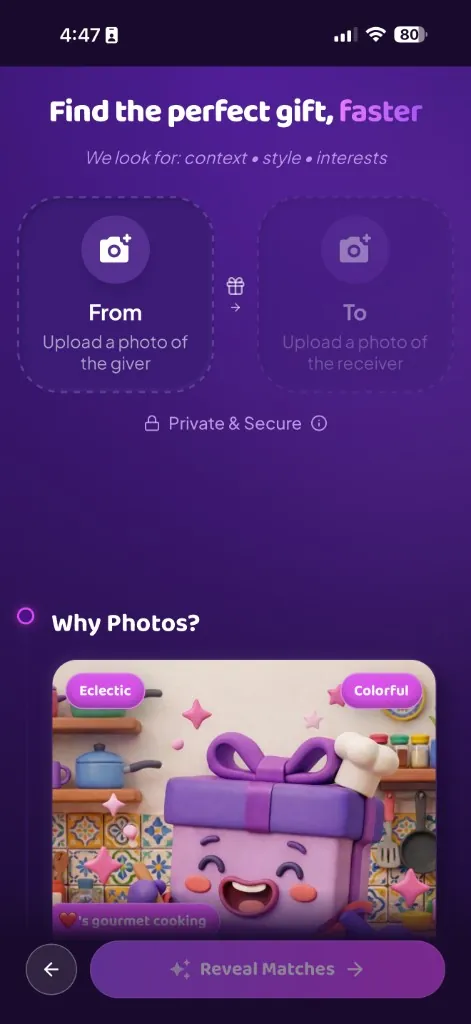
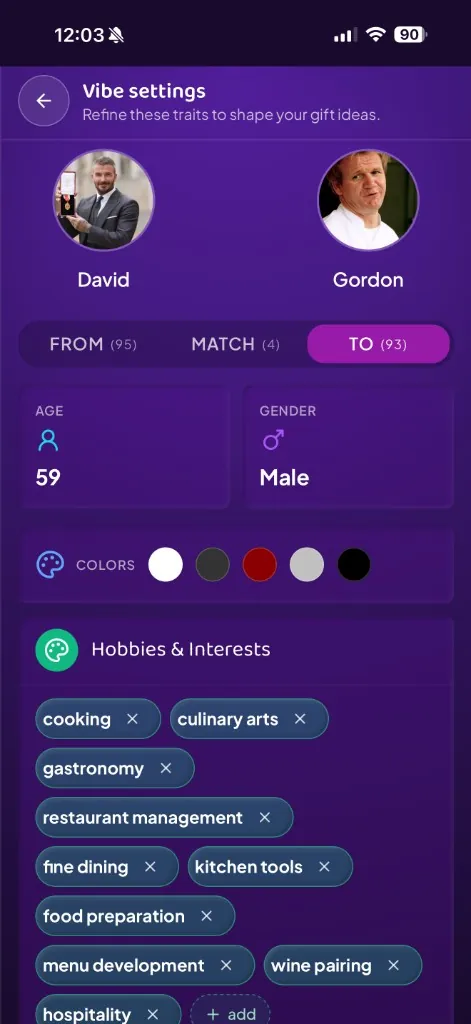
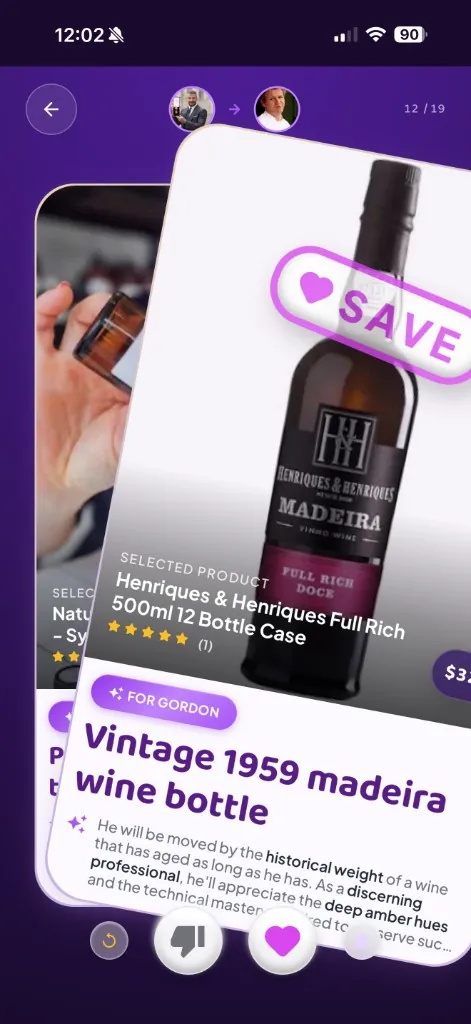
The best shortcut to a good gift is a photo of the person's space. Not their wish list, not their Instagram, their actual space. The things someone chooses to live with tell you more about who they are and what they actually like than anything they have ever said out loud about their preferences. That is where we start.