About GiftyWow
How GiftyWow compares to the other ways you find gifts
Most people find gifts the same way. Google a phrase like "birthday gifts for dad," scroll through a listicle, pick the least bad option, and hope for the best. It works well enough. But "well enough" is how 20% of gifts end up unused, returned, or regifted.
GiftyWow compares six ways people find gifts: Google and listicles, gift quizzes, Amazon gift finders, asking friends, ChatGPT and Gemini, and GiftyWow photo-led matching. Listicles and quizzes surface popular or category-matched products, not ideas built for a specific person. ChatGPT and Gemini brainstorm well but draw on the same generic internet content as search. GiftyWow reads photos of both the giver and receiver, creates gift ideas matched to both people, and links every idea to real products. For a scored side-by-side comparison of seven dedicated AI gift finders, see the best AI gift finders deep dive linked from this hub.
GiftyWow takes a different approach. Instead of searching for what's popular, we start with who the person actually is, create gift ideas matched to them, then find real products that fit your budget and location. Here's how that stacks up against the alternatives.
Side by side: six ways people find gifts
| Feature | Google & listicles | Gift quiz | Amazon gift finder | Ask friends | ChatGPT / Gemini | GiftyWow |
|---|---|---|---|---|---|---|
| Knows who you're buying for | No. Same results for everyone. | Partially. 5–10 generic questions. | No. Category filters only. | Yes, but limited to what they tell you. | Only what you describe in the conversation. | Yes. Photo analysis reads style, interests, environment, and personality. |
| Considers the giver too | No. | No. | No. | Sometimes. | Only if you mention yourself. | Yes. Both giver and receiver photos shape the ideas. |
| Matches the occasion context | No. A "birthday gift for dad" search gives the same results whether he's turning 40 or 80. | Partially. Budget and age, but not relationship, culture, or timing. | No. | Sometimes, if they know the situation. | Only what you describe. Can miss cultural cues, timing, and relationship dynamics. | Yes. Occasion rules, cultural expectations, timing, hemisphere, and relationship closeness all shape the ideas. |
| Learns from what similar givers loved | No. Rankings are based on affiliate commissions or ad spend. | No. | Partially. "People also bought" is product-level, not occasion-level. | No. One person's opinion. | No. Draws from generic internet content. | Yes. Ideas are shaped by what thousands of people in similar gifting situations actually swiped right on. |
| Gives you ideas, not just products | No. Product listings only. | Rarely. Usually links straight to products. | No. Products from Amazon's catalog. | Sometimes. Friends can suggest experiences and creative ideas. | Yes. Good at brainstorming ideas, but you still need to find the actual products yourself. | Yes. Every idea is a concept (an experience, a pairing, a moment) with real products attached. |
| Explains why each idea fits | No. Just a product list. | Rarely. | No. | Sometimes, if they explain their thinking. | Sometimes, if you ask it to. | Yes. Every idea comes with a reason tied to who the person is. |
| Avoids bad gifts automatically | No. Will happily suggest gym gear for someone who hates the gym. | Rarely. | No. Suggests based on purchase history, not gifting context. | Depends on the person you ask. | No built-in filtering. Can suggest tone-deaf or impractical ideas. | Yes. Built-in rules screen out "fix-you" gifts, values clashes, sore spots, and duplicates. |
| Finds surprises | Unlikely. Page-one results are the same for everyone. | Unlikely. Limited product database. | Unlikely. Optimized for conversion, not surprise. | Possible, if they know the person well. | Possible, but limited to remixing content that already exists online. | Yes. Designed to connect dots between signals you'd never link yourself. |
| How much you need to filter | Hundreds of products across dozens of tabs. | 20–50 results from a small database. | Hundreds of products in one catalog. | 1–3 suggestions (if they reply). | 5–15 ideas, but then you're back to Google to find the products. | A pre-filtered shortlist. The filtering is already done for you. |
| Time to get ideas | 15–30 minutes of scrolling and comparing. | 5–10 minutes filling out a quiz, then browsing results. | 5–10 minutes filtering categories. | Depends on response time. Could be days. | 5–10 minutes of back-and-forth conversation, then shopping time on top. | Under 3 minutes. Upload photos, check the vibes, browse ideas. |
| Cost | Free. | Free or freemium. | Free (but products are Amazon only). | Free (but you owe them one). | Free or subscription. | Free to try. Paid packs add more matches when you need them. |






The table is honest about one thing: every method works sometimes. You can absolutely find a great gift on Google if you already know what you're looking for. You can get a solid recommendation from a friend who knows the person well. ChatGPT can brainstorm ideas faster than you can think of them yourself.
GiftyWow is built for the times when you don't already know. When you're stuck, when the person "has everything," or when you want to do better than the first ten results on a search page. And because every idea is shaped by what thousands of other givers in similar situations actually loved, you're not starting from scratch. You're starting from what already works for people like you, buying for people like them.
For a scored lab test of dedicated AI gift finders (not feature checklists), see our side-by-side AI gift finder comparison : seven tools, three test scenarios, every recommendation rated the same way.
What Google gives you vs what GiftyWow gives you
Search "birthday gifts for 60 year old woman" and you'll get a listicle. Ten to twenty products ranked by the publisher's affiliate commission, not by fit. The list doesn't know if your mum is a ceramics collector or a gardener, whether she prefers linen or cashmere, whether she already owns a KitchenAid or would find one patronizing. It gives you what's popular. You do the rest.
There's also a structural problem most people don't think about. Google only surfaces products that retailers have tagged with the exact words you searched for. That means you're only ever seeing what large retailers have deliberately optimized for your query. The niche ceramics studio that makes the thing your mum would actually love? They probably never thought to tag it as a "birthday gift for 60 year old woman." So you'll never find it that way.
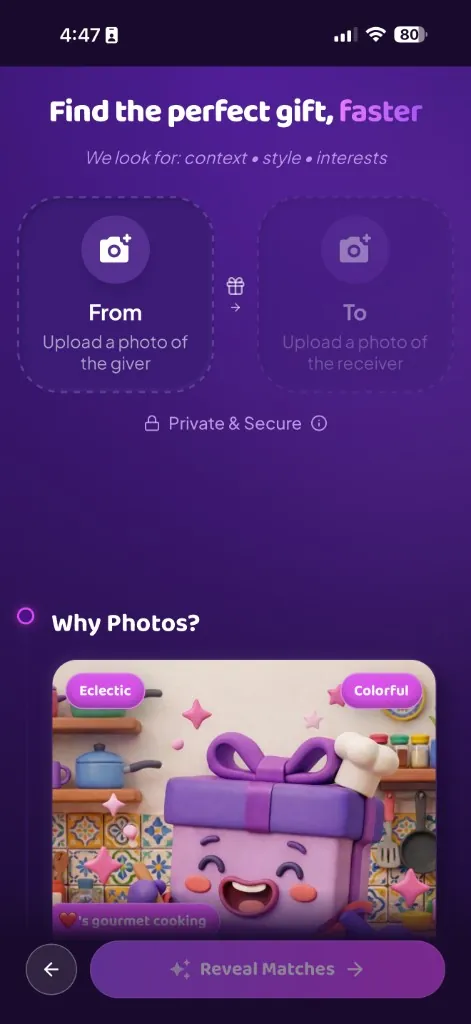
GiftyWow starts somewhere different. Upload a photo of your mum and a photo of yourself, and we pick up on signals you'd never think to type into a search bar: the textures in her home, the brands she gravitates toward, her color palette, whether her shelves are minimal or layered. Then we create gift ideas based on those signals, not on what's trending this week.
The difference isn't just personalization. It's the starting point. Google starts with products and asks you to evaluate them. GiftyWow starts with people and creates ideas that only make sense for your situation. A product is something you buy. An idea is the experience, the memory, the moment that the product creates. We start with the idea, then find the products that bring it to life.

What about gift quizzes?
Gift quiz sites ask you to answer questions: What's their age? What are their hobbies? What's your budget? The idea is sound, but the execution has a ceiling. A quiz can only work with what you explicitly tell it, and most people can't articulate what makes someone tick in a dropdown menu. "Hobbies: cooking" doesn't capture the difference between someone who makes sourdough every weekend and someone who orders meal kits.
A photo captures that difference without you having to describe it. The kitchen in the background, the apron hanging on a hook, the cookbook spine on the shelf. These are signals that a quiz would never ask about and you'd never think to mention, but they're exactly the kind of detail that separates a great gift from a generic one.
There's also the giver side. No quiz asks about you. But who the gift is from matters. A gift from a daughter to her mum carries different weight than a gift from a colleague. GiftyWow reads both photos because the right gift sits at the intersection of who you are and who they are.
And then there's what the quiz is selecting from. A quiz draws from a fixed product database, usually from a single retailer or a small set of affiliate partners. GiftyWow draws from the full internet, filtered by your location and budget, and shaped by what thousands of other people in similar contexts actually loved. The pool of possibilities is fundamentally different.

What about asking ChatGPT or Gemini for gift ideas?
You can absolutely ask an LLM for gift ideas, and the results are often better than a generic listicle because you can describe the person in natural language. "My dad is retired, loves fishing, spends weekends at the lake with his grandkids, and has a well-organized shed" gives an LLM enough to work with.
But here's what's actually happening under the hood: the LLM is doing a faster, smarter version of the same Google search you would have done. It's pulling from the same internet content, the same listicles, the same product descriptions that everyone else sees. It's filtering that content based on your description, which is a genuine improvement over scrolling through it yourself. But the ideas it generates are still based on what already exists online, written for a general audience, not created for your specific person.
GiftyWow does something different. We don't remix existing internet content. We build a profile from the photos you upload, pulling signals that go way beyond what you'd describe in a chat (the textures in their home, the brands they gravitate toward, their color palette, their spending level, even the difference between someone who collects carefully and someone who accumulates casually). Then we match ideas to that profile using patterns from what thousands of other people in similar gifting situations actually swiped right on. That's a layer of context that no LLM has access to, because it doesn't exist on the internet. It exists in the choices real givers made inside GiftyWow.
Every idea also links to a real product you can actually buy, filtered by your location and budget. No copying product names into Google after the fact. No discovering that the thing the chatbot suggested doesn't ship to your country or costs three times what you expected.
Deeper dive: we put seven AI gift finders to the test (same steering line, verbatim picks, scored recommendations).
How it actually comes together
Here's a real example of how GiftyWow connects dots you'd never connect yourself.
The situation: You're buying an Easter gift for your aunt. She just got a new car for the first time in twenty years, and it's a big deal for her. You're going to see her over Easter and want to mark both moments.
What you upload: A photo of your aunt with her new car. A photo of yourself.
What GiftyWow picks up: Your aunt's favorite color (pink, from her clothing and accessories). Her preference for natural materials (linen scarf, wooden jewelry, ceramic mug in the background). Your own leaning toward sustainability (natural fibers, eco-conscious brands in your photo). The fact that you'll be together for Easter. That the car is new and clearly important to her.
The idea GiftyWow creates: A handmade felt flower to hang from her rearview mirror. Natural wool fibers (aligned with both your values and hers). Pink and soft colors that match her palette. Infused with a passionfruit scent, so the car smells beautiful every day. The Easter connection: flowers, spring, new growth. The car connection: something she'll see every single day and think of you.
That's not a product you'd find by searching "Easter gifts for aunt." No listicle would suggest it. No LLM would connect those threads. It's a $20 gift that feels like it took weeks of thought, because the thinking actually happened. It just happened in seconds.
What gift-finding really looks like
Here's what most people don't talk about: finding a gift isn't a single event. It's a process that stretches over weeks.
A few weeks before an occasion, you start thinking about it in the background. You might Google something, text a friend, or browse a store. You build a mental list of possibilities. Then you get distracted. The thinking picks back up a few days later. You add to the list, cross things off, second-guess yourself. This cycle repeats until the deadline forces a decision, and by then your options are narrower because timing, stock, and shipping have cut half of them out.
GiftyWow compresses that whole cycle. Instead of weeks of background thinking, scattered searches, and a last-minute scramble, you upload photos once and get a shortlist of ideas that are already filtered for your budget, your location, and who this person actually is. You can come back to it whenever you want, add more context, upload a different photo for fresh ideas, or save your favorites for later. The thinking that would normally happen across dozens of small moments over several weeks happens once, and you can build on it from there.
Where GiftyWow is still catching up
We'd rather tell you where we're still working than pretend everything is already there.
Google is faster when you know what you want
If you've already decided on a specific product and just need to compare prices, a search engine is the right tool. If you know exactly how a retailer describes the thing you're looking for, Google will get you there faster than we will. GiftyWow is built for the "I don't know what to get" moment, not the "I know exactly what I want" moment.
Surprise beats asking, but asking still has its place
The best gifts are the ones that show you noticed something the person never said out loud. That's what GiftyWow is designed for. But a direct conversation still matters for the practical stuff: exclusions ("please don't get me another candle"), wishlist items, or situations where you're splitting a group gift and need to coordinate. We're not replacing the conversation. We're replacing the hours of searching that usually come after it.
Photo analysis is a tool, not a crystal ball
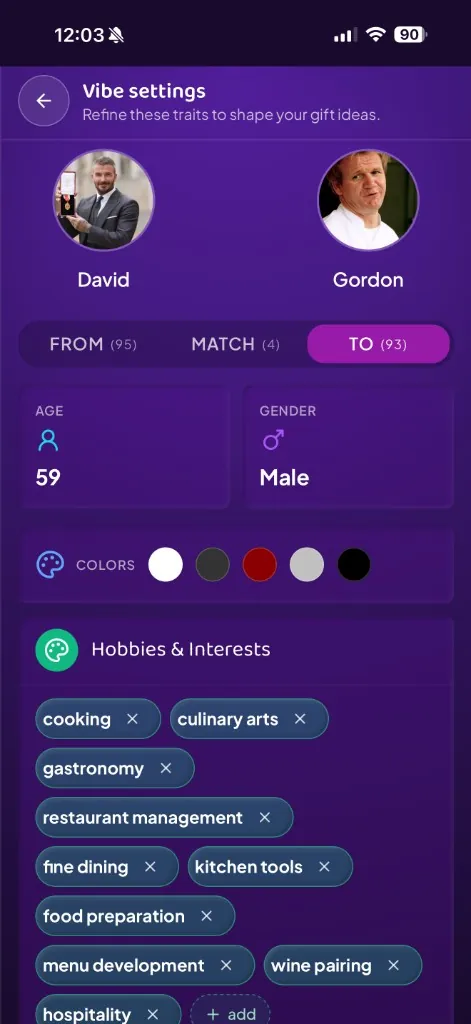
Photo analysis is good, not always right. Sometimes the system over-indexes on one signal in a photo or misses something obvious. That's why we show you everything we spotted and let you edit it before any ideas are generated. You're always in control of what feeds the recommendations. And if you've gone through your ideas and want fresh ones, upload a different photo with different context. A photo at home and a photo at work will surface completely different sides of the same person.
Common questions about how GiftyWow compares
Is GiftyWow better than Googling for gift ideas?
For finding a gift that's genuinely matched to who someone is, yes. Google gives you products sorted by popularity or ad spend. GiftyWow creates ideas matched to the actual person, their relationship to you, and the occasion. If you already know what you want and just need to buy it, Google is faster.
The deeper difference is what each tool is drawing from. Google surfaces products that retailers have tagged with the words you searched for, which means you only see what large retailers have optimized for your exact query. GiftyWow starts with the person (via their photo), builds a profile of who they are, and creates ideas matched to that profile using patterns from what thousands of other givers in similar situations actually loved. It's a different starting point that leads to genuinely different results.
If you want to understand the full difference between product search and idea matching, our "how it works" page walks through the process step by step.
Can I use ChatGPT or Gemini to find gift ideas?
You can, and the results are often decent. LLMs are good at brainstorming when you describe someone in natural language. The gap is that they're drawing from the same generic internet content as every other search method, and they don't have access to what real givers in similar situations actually loved. You also still need to find and verify the products yourself.
The limitation isn't intelligence. LLMs are smart. The limitation is data. An LLM doesn't know what 50,000 other people buying for "retired fishing dads" actually swiped right on. It doesn't pick up visual signals from a photo that you'd never think to describe in words. And it can't check whether the thing it suggested is available in your location, at a price you'd actually pay, right now. GiftyWow closes those gaps by combining deep photo-based profiling with crowd-sourced preference data and real-time product availability. The ideas are specific to your person, shaped by what works, and linked to something you can actually buy.
Read our scored lab test of seven AI gift finders for verbatim picks from the same brief, side by side.
How does GiftyWow know what gifts to suggest?
When you upload a photo, we pick up on 100+ signals about the person: their style, the brands they gravitate toward, the textures and materials around them, their color palette, their spending level, and more. We combine that with who the gift is from, what the occasion is, and what thousands of other people in similar gifting situations actually loved.
The profile we build from a photo goes deeper than what most people could describe about someone they know well. We're reading the difference between someone who collects carefully and someone who accumulates casually. The difference between someone who wears premium basics and someone who wears statement pieces. The difference between a home that's minimal and a home that's layered. These signals feed into our matching, alongside the occasion context (cultural expectations, timing, relationship closeness) and crowd-sourced patterns from real givers. We then filter out ideas that would miss the mark: gifts that imply criticism, gifts that assume too much, gifts that duplicate what they already have, and gifts that don't match the emotional register of the occasion. What you see is the shortlist that survives all of that.
What does GiftyWow see in a photo?
Style and appearance cues (clothing, accessories, grooming), environment signals (home decor, workspace, outdoor setting), brand preferences and spending level, color palette, materials and textures they're drawn to, lifestyle indicators, and personality signals. We show you everything we spotted so you can edit it before ideas are generated.
The reason we use photos instead of questionnaires is that photos capture things you'd never think to describe. A quiz might ask "what are their hobbies?" and you'd say "cooking." But a photo of their kitchen tells us whether they're a sourdough-from-scratch person or a meal-kit person, whether their kitchen is minimal or packed with gadgets, whether they lean toward rustic ceramics or sleek modern cookware. Those differences matter enormously when matching gift ideas, and they're almost impossible to capture in a form field. We also read both photos (yours and theirs) because who the gift is from shapes what the right gift is. A gift from a daughter carries different weight than a gift from a colleague.
Is it really free?
Yes. Create a free account, upload your photos, and swipe through personalized gift ideas at no cost. If you want more matches beyond the free set, there are affordable match packs and a monthly plan.
We're not hiding features behind a paywall to trick you into subscribing. The free experience gives you the full profile, the full matching, and a generous set of ideas to swipe through. Match packs are for when you want to keep going, either because you're buying for multiple people or because you want to explore more options for the same person.
How is this different from Amazon's gift finder?
Amazon's gift finder uses category filters (age, interest, price range) to surface products from its own catalog. GiftyWow creates original gift ideas based on photo analysis of both the giver and receiver, then finds products across multiple retailers. The ideas are matched to who the person actually is, not just what category they fall into.
There's also a fundamental difference in what's being optimized for. Amazon's gift finder is designed to sell Amazon products. Its recommendations are optimized for conversion within its own catalog, not for fit with your specific person. GiftyWow is designed to find the right idea first, then find the right product to bring it to life, sourced from wherever makes sense for your location and budget. We're not a retailer. We're the thinking that happens before you shop.
Can GiftyWow replace asking friends and family for suggestions?
It's a complement, not a replacement. Friends and family know things a photo can't capture (inside jokes, recent conversations, wishlist hints, and the emotional temperature of the relationship right now). GiftyWow picks up on visual and contextual signals they might not think to mention. Used together, you get both layers.
There's one thing worth noting though. If you want to give a gift that genuinely surprises someone, asking them what they want is the one thing that guarantees you can't. The best gifts show that you noticed something they didn't say out loud. That's where GiftyWow adds something that even a close friend can't: we surface connections between signals that nobody was consciously looking for, and turn them into ideas that feel like you spent weeks thinking about it.
Do I still need to do my own shopping after using GiftyWow?
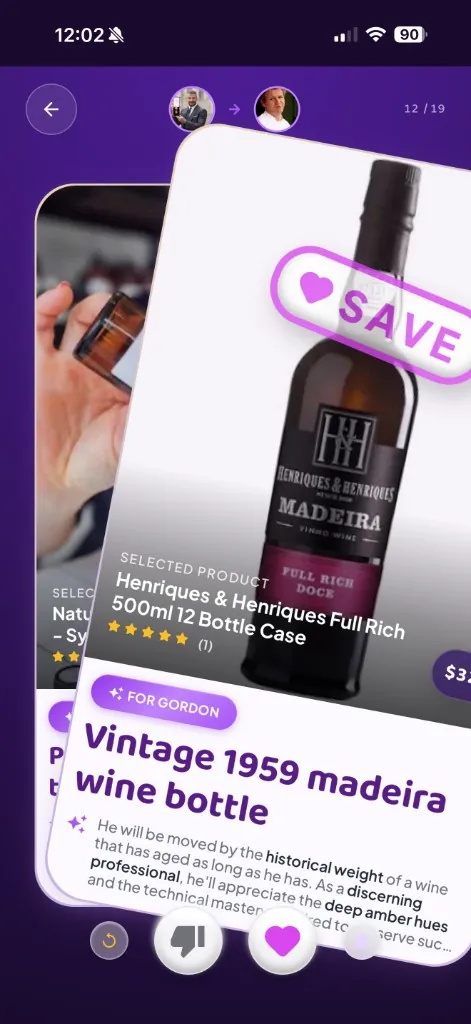
No. Every gift idea links to a real product you can buy, filtered by your location and budget. You can go from idea to purchase without leaving the platform.
That said, you don't have to shop through us either. If one of our ideas sparks something and you want to find your own version of it, go for it. The value is in the ideas and the matching, not in being a store. Some people use GiftyWow to figure out what to get, then buy it wherever they want. That works too.
Ready to see it yourself?
Upload a photo. See what we spot. Browse gift ideas that actually fit. Takes under three minutes and costs nothing to try.
Try GiftyWow free