Silca Tredici cycling multi-tool
Quality metal tool for weekend rides. Matches his preference for well-made gear over cheap plastic.
Tested with real scenarios
Same person. Same budget. Same city. We ran one steering line through GiftList Genie, The Gift Tool, ChatGPT, and GiftyWow, then scored every recommendation with the same rubric we use on real gifts.

We ran the same birthday scenario through GiftList Genie, The Gift Tool, ChatGPT, and GiftyWow, then scored every recommendation with the same rubric. GiftyWow returned the most usable picks across all four of the recipient's hobbies. The Gift Tool's entire set was rejected after we found hallucinated products that don't exist. ChatGPT generated good individual ideas but couldn't link them to real products. GiftList Genie matched hobbies but recommended gear a serious hobbyist would already own.
47th birthday · Denver, Colorado · $75 USD · tested June 2026
Every tool got the same brief:
Nico is turning 47. He fishes on weekends, homebrews, smokes meat in the backyard, and cycles when he can. Something he would actually use, not clutter. Budget around $75. We live in Denver, Colorado. Steering line · 47th birthday · Denver, Colorado
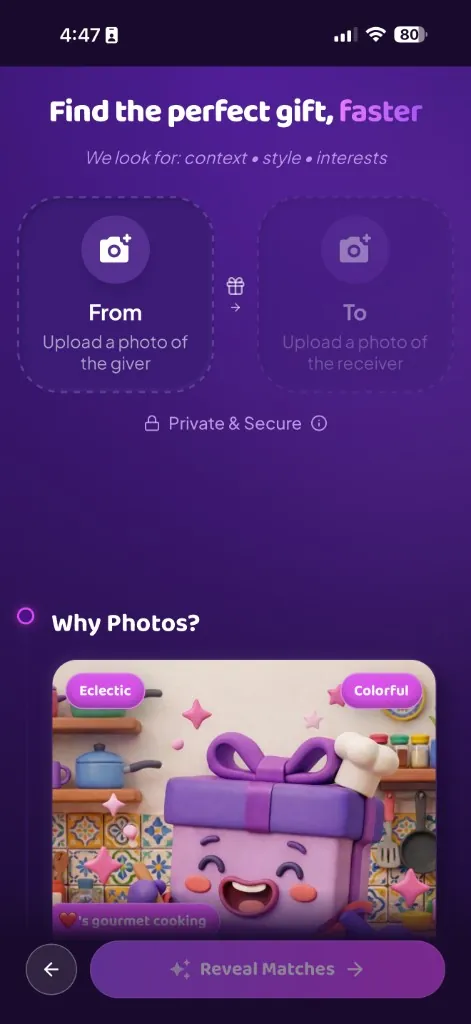
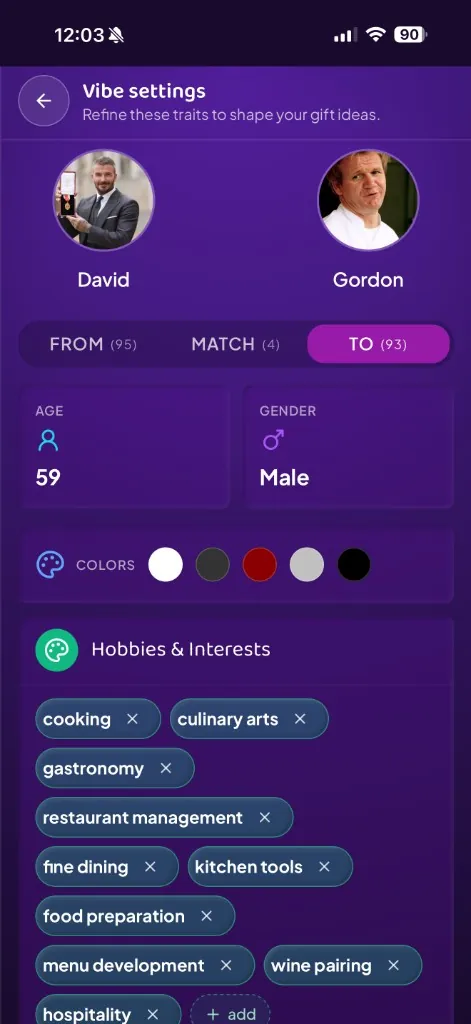
Quiz tools received equivalent inputs (husband, 47, fishing/BBQ/beer/cycling, birthday, $50-100). GiftyWow used photos of both the giver and the receiver through the full photo-match flow. ChatGPT received the steering line as a text prompt, no photos. We publish what each tool returned verbatim, then share the verdict from our scoring process. Photos are from our editorial persona pool. We also tested ChatGPT with photos and Gemini internally; both are omitted here because neither is a gift finder product.
| Tool | Verdict | What went wrong | Usable picks |
|---|---|---|---|
| GiftyWow | Strong | Minor generic misses on 5 of 18 | 13 of 18 |
| GiftList Genie | Mixed | Already-owns risk on common hobbyist gear | 13 of 20 |
| The Gift Tool | Failed | Hallucinated products; entire set rejected | 0 of 20 |
| ChatGPT (text only) | Mixed | Can't link to real products; some already-owns risk | 12 of 20 |
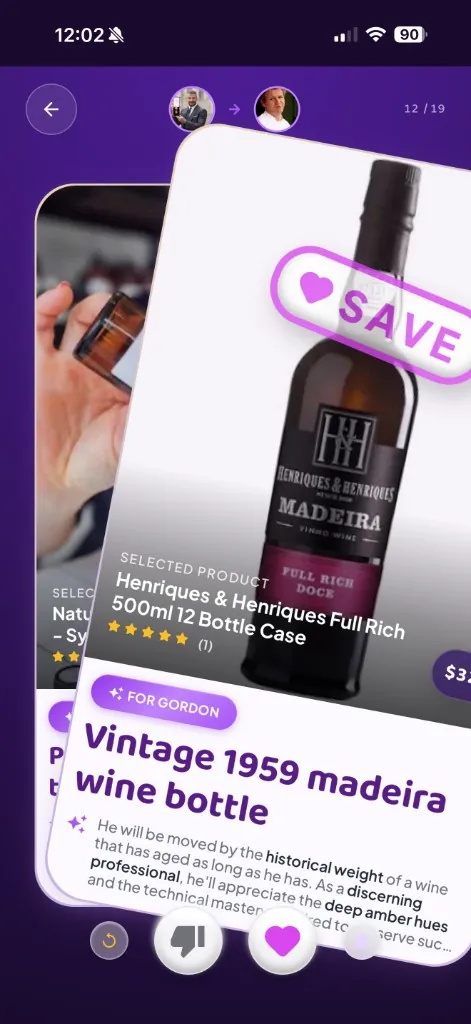
The merino wool cycling cap is the pick that shows what cross-profile matching actually looks like. The giver knits, works with wool, and gravitates toward natural fibers. The receiver cycles on weekends. A quiz would never connect those two signals, because a quiz doesn't know who the giver is. GiftyWow spotted the overlap and recommended a high-quality merino cycling layer that fits both people's worlds. What stood out
Quality metal tool for weekend rides. Matches his preference for well-made gear over cheap plastic.
A technical upgrade for someone serious about brewing. Small, useful, no clutter.
Connects the giver's feel for natural fibers with the receiver's cycling habit. This is the kind of match a quiz can't make.
Lightweight, durable upgrade for his bike. Quality material signal matches his profile.
An experience that connects both people. Homebrewing interest meets a shared outing in their city.
Set note: 13 of 18 ideas scored as usable across cycling, fishing, brewing, BBQ, and one experience gift. No duplicates, no lazy defaults (no candles, no journals, no generic "grill master" merch). The five that didn't pass were minor generic misses, not structural problems.
Genie's biggest problem is the one quiz tools always have: they match hobbies on paper and recommend the obvious gear for each one. The Bluetooth meat thermometer sounds like a slam dunk for someone who smokes meat, but anyone who's been doing it for years already owns one. When you check a box that says "BBQ" and another that says "fishing," the tool reaches for the default item in each category. It doesn't know what gear the person already has, because a quiz can't see their backyard. What stood out
Solid pick for a homebrewer. Practical, not redundant.
Good for weekend fishing. Functional, not generic.
Fishing storage. Useful, though a dedicated angler may already have one.
The classic already-owns problem. Someone who smokes meat regularly almost certainly has a probe. This is the default suggestion every quiz tool makes.
Cycling maintenance, but a weekend rider who also fishes, brews, and smokes may not prioritize bike-cleaning gear. Feels like the tool was filling a slot.
Set note: 13 of 20 ideas passed. The set covered all four hobbies, but several items carried "already owns" flags. No hero-level gift near the top of the budget. The giver would browse this list and find usable options, but nothing that would make them feel like they nailed it.
This set was a complete failure. The Gift Tool returned 20 ideas, and after scoring, zero were accepted. The tool hallucinated products that don't exist (a "Stanley brew siphon," a "Headwind tackle box," a "Bungee bike strap," none of which are real SKUs you can buy anywhere). The ideas that weren't fabricated were generic brand-name items like YETI and Hydro Flask that ignore the "quality-conscious, hates cheap plastic" signals in the steering line. And fishing, named explicitly in the brief, barely appeared. What stood out
An insulated bottle is a safe gift, but it's also a generic one. The same list included a Hydro Flask, which is functionally the same product.
A second insulated bottle in the same list. Two of the same category in one recommendation set.
Already-owns risk for someone described as a regular pitmaster.
This product does not exist. The tool generated a brand-name combination that sounds real but isn't something you can purchase.
Another fabricated product. "Headwind" is not a tackle brand, and this specific item has no listing on any retailer.
Set note: 0 of 20 ideas were accepted after scoring. The set was plagued by hallucinated products, generic brand defaults, and duplicate categories. This is the worst-case scenario for a gift finder: the person using it would try to buy several of these items and discover they don't exist.
ChatGPT did the strongest job of any tool at understanding the brief. It correctly identified all four hobbies, stayed within budget, and even added a Denver brewery gift card for local flavor. The problem is structural: ChatGPT is a chatbot, not a product finder. Some of its ideas are concepts rather than purchasable products (the "Weekend Hobby Bundle" is a made-up basket, not a SKU), and the ones that are real still require you to go find them yourself. You get a list of suggestions, not a list of links. What stood out
Good upgrade pick for smoker monitoring. Practical and within budget.
A technical tool for someone serious about brewing. This is the kind of idea that shows ChatGPT understood the brief.
Nice local touch. Shows awareness of the city in the steering line.
Keeps lures sorted. Solid if generic.
A basket combining "wood chunks, BBQ rub, and merino socks." Sounds thoughtful, but this is not a product you can buy. The giver would need to build it from scratch, which is the task they came to a gift finder to avoid.
Set note: 12 of 20 ideas passed. The quality of the thinking was strong, but the gap between "idea" and "product you can buy" is the fundamental limitation. Eight ideas either didn't exist as purchasable products, duplicated other items in the list, or were things an experienced hobbyist likely already owns.
Three problems showed up across multiple tools, and they all come from the same root cause: these tools only know what you tell them.
Quiz tools default to category gear.
When you check "fishing" in a quiz, the tool reaches for the default fishing gift: a tackle box, a thermometer, a knife. It doesn't know what gear the person already has, because a dropdown can't see their garage. GiftList Genie returned usable ideas, but several of them were things a serious hobbyist would already own. That's not a one-off mistake. It's what happens when a tool matches hobbies to product categories instead of matching a person to a gift.
Chatbots generate ideas, not products.
ChatGPT understood the brief better than any quiz tool, but understanding and delivering are different things. A chatbot can describe the right gift in words. It can't verify that the product exists, check the price, or give you a link to buy it. The "Weekend Hobby Bundle" sounded like a thoughtful birthday present. It's also imaginary. If you have to build the cart yourself, the tool hasn't finished the job.
No other tool profiles the giver.
This is the structural gap that none of the alternatives address. A gift sits at the overlap between two people: the one giving it and the one receiving it. Quiz tools and chatbots only ask about the receiver. They have no data on who is giving the gift, what that person would feel proud handing over, or where the two people's tastes intersect. That's why GiftyWow found the merino wool cycling cap. The giver works with natural fibers. The receiver rides on weekends. A merino cycling layer sits in the overlap between those two worlds. No quiz would make that connection, because no quiz knows the giver exists.
We scored every recommendation from every tool using the same process. Each gift idea was evaluated on whether the recipient would actually use it, whether it overlaps with gear they likely already own, whether it connects to their real interests rather than surface-level hobby labels, and whether you can actually buy it. We also scored each set as a whole for variety, duplicates, and lazy defaults (the candles-and-journals problem).
We're not publishing the full scoring framework, but the principles are straightforward: a good gift feels like it was chosen for this specific person. A bad gift could have been recommended to anyone. The rubric tests for exactly that distinction.
Every tool received the same scenario. GiftyWow used photos of both people. Quiz tools got equivalent hobby and budget inputs. ChatGPT received the steering line as plain text. All scoring was done blind, meaning the same criteria applied regardless of which tool generated the idea.
For the six-way method comparison (Google, quizzes, Amazon, friends, LLMs, GiftyWow), see How GiftyWow compares.
GiftyWow returned the broadest set of usable recommendations, covering all four hobbies without recommending the same type of thing twice or suggesting gear the recipient likely already owns. No tool had a flawless run, but GiftyWow was the only one that matched ideas across both photos, which produced recommendations the other tools couldn't reach.
ChatGPT with photos isn't something you'd find by searching for a gift finder, so it's not in this comparison.
We checked whether each gift would actually get used, whether the person probably already owns it, whether you can buy it, and whether it connects to who they actually are rather than just a hobby label. For each full list, we also looked at whether the ideas repeated the same type of gift, felt generic, or covered the hobbies named in the brief. We used the same criteria for every tool.
A gift quiz asks you to answer questions and recommends from a catalog based on your answers. A gift generator takes a text description and produces ideas (ChatGPT works this way). A gift finder is broader and includes both. GiftyWow is a photo-led gift finder: it reads photos instead of quizzes or text, profiles both giver and receiver, and links every idea to a shoppable product.
Yes. This page covers one scenario (Nico's 47th birthday, Denver, $75). We plan to add a second scenario with a different occasion, relationship, and city. Pickify will be added when we've completed that test.
We share the results and the reasoning on this page. The detailed scoring framework stays internal.
We can show you results all day. The faster way to know if it works is to try it with your own photos and your own person.
Try the photo-led gift finder